
GLOVE, ACTUALLY | FILM REVIEW
PILLION LUBES UP TO EXPLORE THE GAY SUB-CULTURE
Review by Arnold Wayne Jones
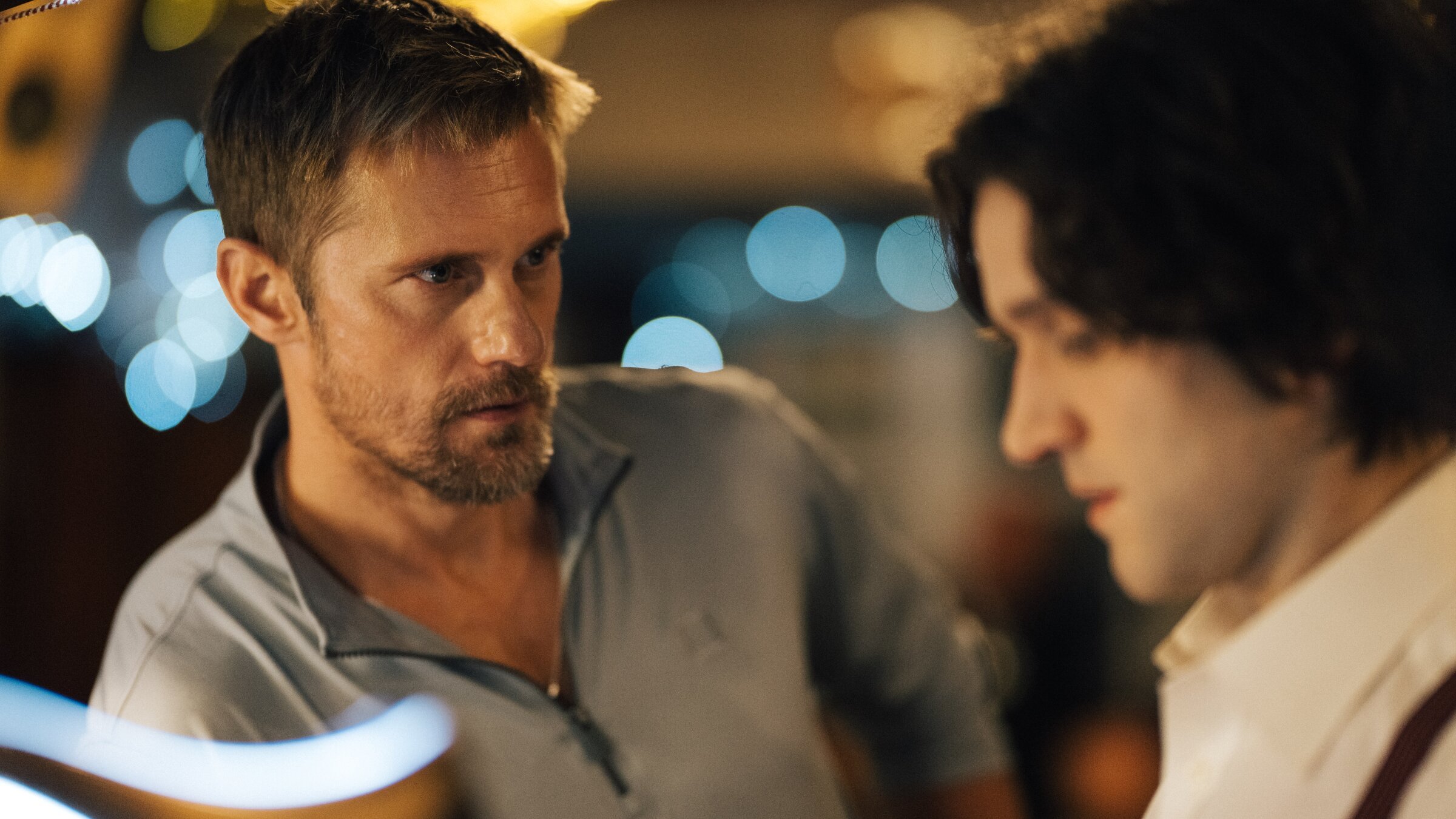
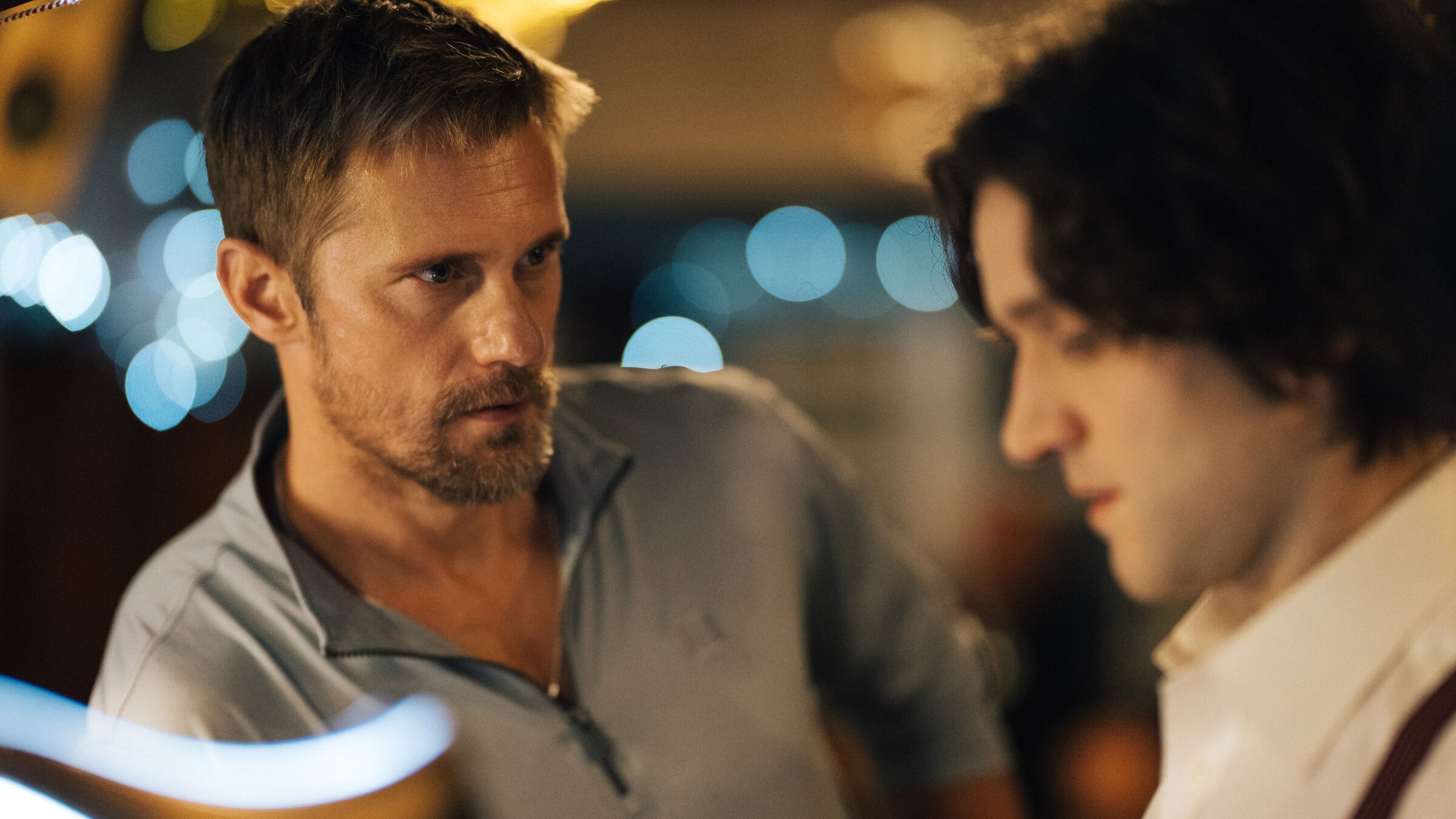
Alexander Skarsgård and Harry Melling star in Pillion. Courtesy of A24
Sometimes the truly remarkable thing about a movie isn’t what it does, but that it gets the chance to do it in the first place. Pillion is an enthrallingly unexpected dom-com about gay leather/BDSM culture, and I’ll explain why in due time; but can we linger for a moment on the marvel that it got made at all?!?!? The pitch isn’t exactly a box-office slam-dunk… even after the surprising (and woefully undeserved) success of the Fifty Shades movies. Fifty Shades of Grey – the only one I had the wherewithal to endure in the theater – was a disastrously smug but prudish little titilator. The film pretended that it was a racy dive into the sexual underworld, but I’ve seen more sensual bondage in a Tom Ford print ad for cologne. It wasn’t even outrageous enough to work ironically as camp. (The South Park episode where Mr. Slave “out-whores” Paris Hilton had more oomph in its final two minutes than all hours of the Fifty Shades did combined.)
So what about Pillion? While it stays this side of an NC-17 rating (at least in the edited U.S. release), it holds back almost nothing in the frankness of its portrayal of a gay subculture: that of sub-culture.
The plot plows right in with little explanation but tons of texture. Colin (Harry Melling) is a snaggletoothed Caspar Milquetoast with a sad mop of greasy hair and an unfortunate affinity for barbershop quarteting. He and his dad (Douglas Hodge) are performing in a gay bar to the delight of his terminally ill mom (Lesley Sharp) and a blind date mom set up when Colin glances at a pair of gay biker boys in a dom-sub relationship. We can see on Colin’s face that the sexual adventurousness of the scene intrigues him; Colin seems like the type whose idea of a hot date is over-the-jeans frottage or a meek handy before shamefully darting off. The sweet-natured bear date and the supportive parents suddenly disappear: Colin has found his people.
One of the leathermen – who only goes by Ray (Alexander Skarsgard) – drops his instructions to Colin at the pub – not his number or email but directions: Be this place, this time. An order. Colin complies, Ray commands him into humiliating but steamy alley sex, then blows him off. They are in a relationship now. Colin doesn’t have a choice. And he kinda likes it that way.
Pillion — the title refers to the small seat on the back of a motorcycle where non-drivers “ride bitch” – offers a smutty tour of the underbelly of leathermen and their subs. At first, Colin is as disoriented and awkward about it as we are: Is he allowed to talk? To resist? To make his needs known? What are the rules? But then again, figuring out the rules – succumbing to the intoxicating magic of sexual surrender – is a huge part of the appeal in the first place. Colin is a born sub, he just needs to figure out its parameters.
It’s probably not a spoiler to say that the only dramatic direction Pillion can head toward is conflict in the relationship: Is Colin actually fulfilled by his time with Ray? But the darkly comic tone belies the possibility that Pillion will devolve into some kind of ’80s-style erotic thriller. There’s too much skewed romance and Edgar Wright-ish British “who, me?”-isms to seem like it will turn into Looking for Mr. Goodbar, Spetters or Basic Instinct. And we don’t really want it to. We may not fully invest in the rightness of this particular relationship, but queer audiences have a built-in tolerance for angular arrangements: Polys, throuples, opens … love is love, man, whether it’s fulsome or Folsom, P-town or piss parties. Whatever floats yer boat.
Which, of course, it what makes the film anti-commercial. Despite some predictable story arcs, we can’t really “blame” Ray – he’s not “the bad guy.” When Colin insists he spend a lunch with mom and dad, we know it won’t go well, but that’s as much the fault of mom’s confrontational moments and Colin’s poor judgment as it is Ray’s enigmatic behavior. Forays into heteronormative domesticity are doomed; the appeal of being queer sometimes is not owing anyone an explanation.
Another reason we don’t lay all the responsibility on Ray’s broad shoulders is because he’s Alexander-effin-Skarsgard!! Clad in a leather bodysuit, his scruffy beard poking out of a chiseled face beneath a brooding baritone, he’s a tall muscular daddy of swoon-worthy dimensions – who among us wouldn’t be tempted to do what he told us to do? Just as good is Lesley Sharp as the protective, nothing-left-to-lose mom and Douglas Hodge as the most supportive gay dad since Michael Stulbarg in Call Me By Your Name. Melling, while good, starts off as an acquired taste. He’s meant to be bland as unsalted grits which makes him a bit of a cipher. When he transforms into a devoted pup, however – and eventually a graspingly lovesick mutt – he’s much more relatable and likeable. The ending feels almost inevitable thanks to him and the uncompromising screenplay and direction by first-timer Harry Lighton. His ride-or-die approach creates tension in such prosaic moments as keys pecked out on a piano but then sashays seamlessly into rough sex with a touch of goofy charm. Ultimately, he says, getting what you want is a discovery… and turning yourself over into getting it is an act of grace.
Now playing nationwide. Opens in Dallas at the Angelika on Feb. 19.

FILM REVIEW: BROS
When Hairy Met Slutty: The unlikely romance of BROS is its blindspot, but the jokes come fast and furious
by Arnold Wayne Jones
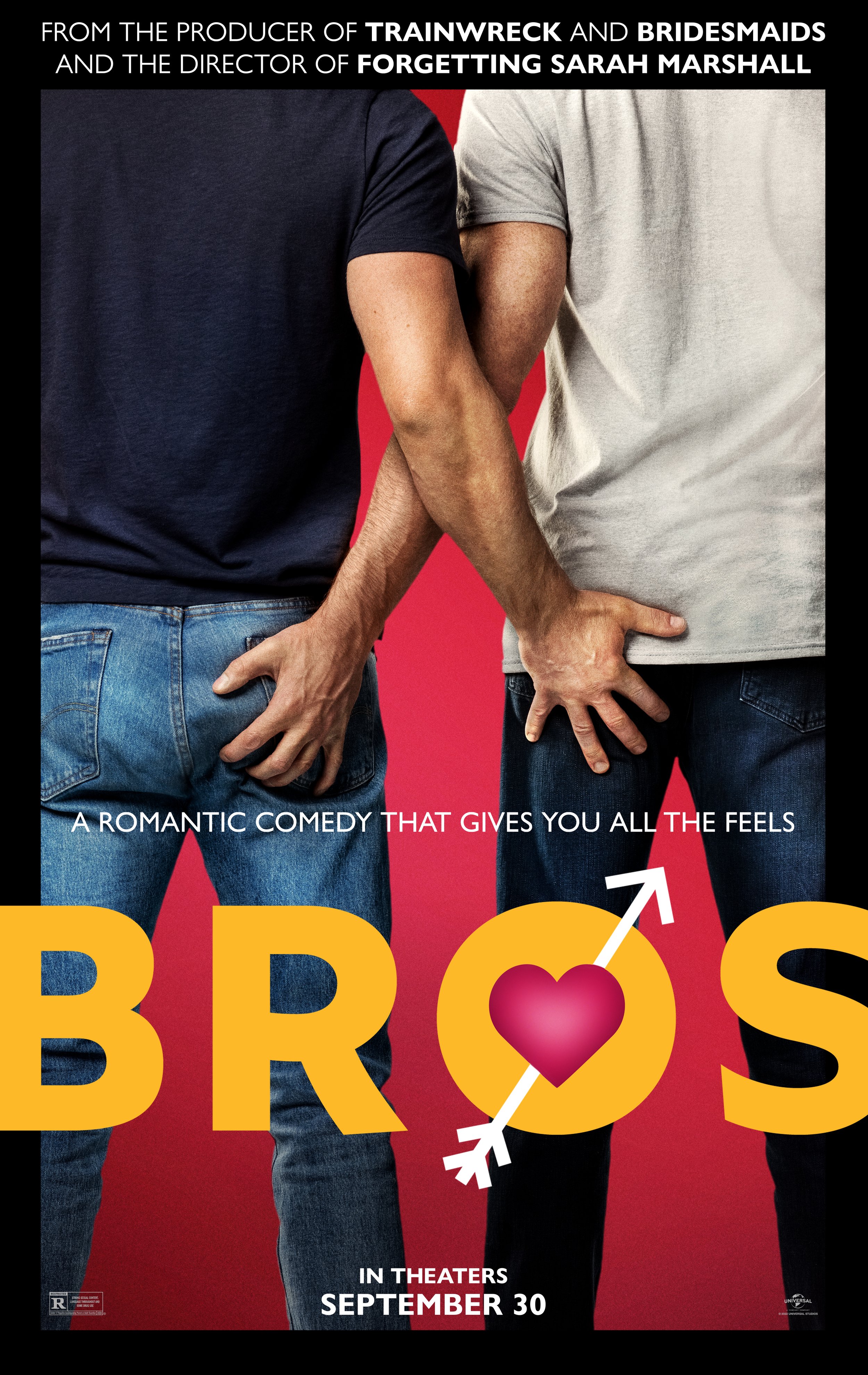
Sometimes, the aggressive marketing of a project can actually undermine our confidence in it.
Take Bros. When we first saw the trailer? Pure delight. But in the intervening months, we’ve been inundated by a a chorus reminding us that this is the first mainstream/sex-positive/big-budget/alphabet-inclusive/majority gay cast/R-rated/Hollywood studio-backed/wide-release/yadda yadda/adult gay rom-com EVER!!!! Subtext: It doesn’t matter if it’s good – it’s important. You do want to encourage gay cinema, don’t you? You’re expected to see it, to say you like it, and bring your friends to see it again… all in solidarity. Being entertaining almost seems incidental to our supporting it. And how can we really know if it’s any good, if the messaging is so unrelentingly politicized?

Courtesy of Universal Studios
So I was more than a little relieved when I ended up genuinely enjoying Bros as much as a I did. Important? Meh. It’s not the 1990s anymore; we are not starved for gay stories –any gay stories – that we will hungrily pretend to like dreck just so that we don’t have withdrawl. We’re post-Brokeback, post-Moonlight, post-Will & Grace. Even straight rom-coms find avenues of gay outreach. The bar has been raised. And for the most part, Bros sails over the bar like an Olympic pole-vaulter.
The premise is pretty standard in a heteronormative-cliche kinda way: Bobby (Billy Eichner) and Aaron (Luke Macfarlane) are two strands in the late-Gen-X DNA of gay dudes: Both excrutiatingly single to the point of relationship-phobic, but with very different vibes: Bobby is the cynic who thinks marriage is actually some kind of punishment for straight folks and gays should embrace their outsider status; Aaron is the meaningless-hookup gym-rat whose serial anti-monogamy gets him laid without commitment.
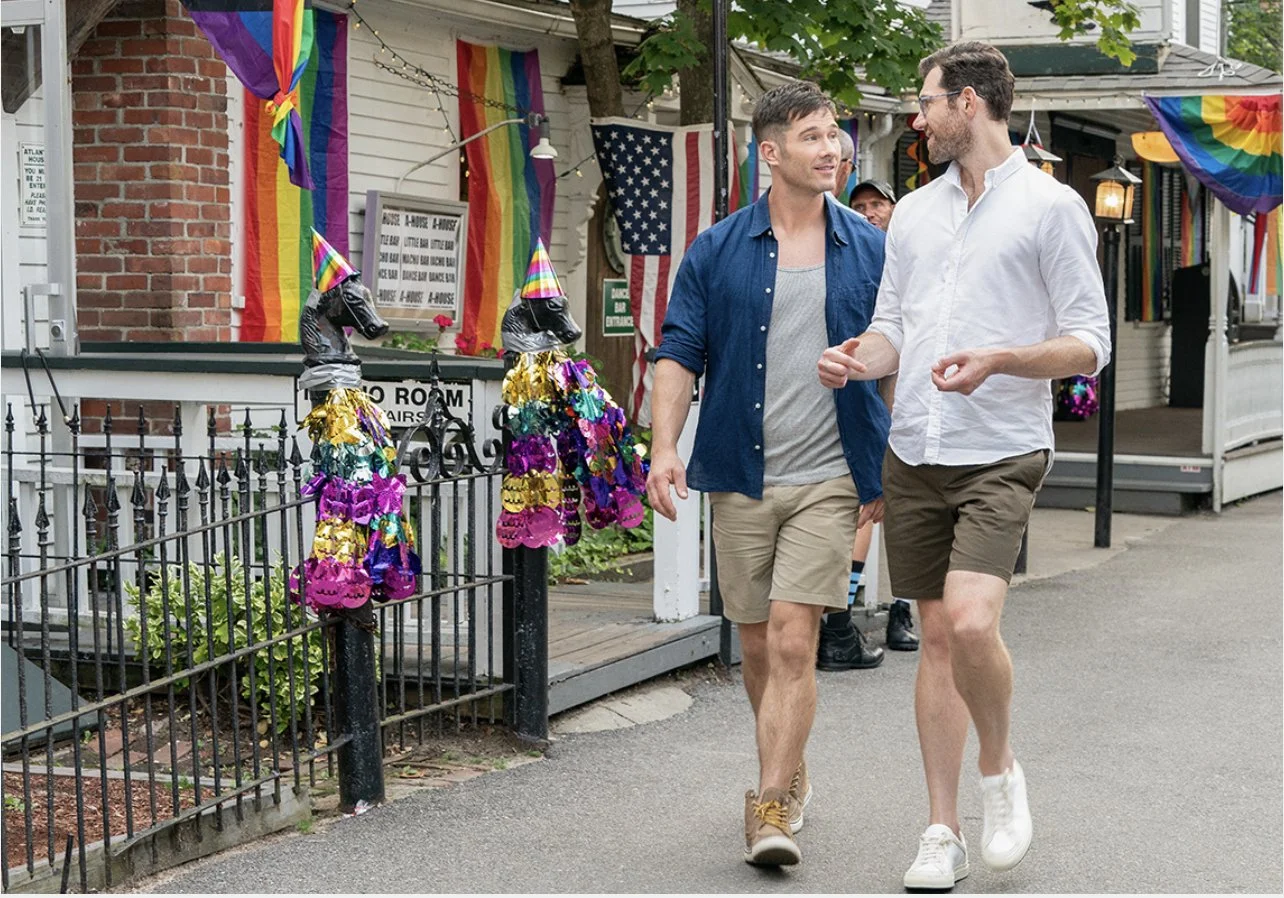
Courtesy of Universal Studios
Yet both are also walking contradictions: For all his disparagement of mainstream culture, Bobby – an erstwhile podcaster now tasked with running a yet-to-open gay history museum – is filled with righteous anger that gay stories haven’t been drilled into the culture like Washington chopping down a cherry tree or Betsy Ross sewing the flag. He’s determined that the museum will not be fun, but confrontational to the point of chastising. In the words of Sally Field, he wants you to like him, to really like him … and what he represents, which is kind of pill-ish. Aaron, on the other hand, has a sensitive side that isn’t served by the soullessness of Grindr dates. He’s a dull estate lawyer who dreams of something more satisfying; even his ripped body isn’t enough.

Courtesy of Universal Studios
The men more-or-less quickly meet up with the agreement that neither, heaven forbid, wants a relationship. It’s When Hairy Met Slutty. But because it is a rom-com, can there be any doubt where they will eventually end up?
The most convincing thread of the plot is the “com” side: The script, co-written by director Nicholas Stoller and Eichner himself, is dense with smart, and smart-alecky, one-liners. Many of the characters, even the small ones or walk-ons by the likes of Debra Messing, are sharply drawn and get their share of zingers. And even when the jokes thin out, the wise observations of gay culture are handled perfectly (for instance, when friends announce they are in a trouple, it’s played less as scandalous than as a lot of work; at the end, the three are still together, without judgment).

Courtesy of Universal Studios
It’s the rom that could have used a little tweaking. A downside of the screenplay is something that often arises when the writer is also the star: A tendency to make his character “right.” A major conflict is Aaron asking Bobby to “tone down” his excessive Bobby-ness when they hang out at Christmas with Aaron’s family. Rather than comply, Bobby intentionally antagonizes them until Aaron snaps out of embarrassment. It’s played as “never ask a gay man not to be himself” – that the initial request was the original sin – when, for me, it was more “you don’t have to have an opinion about everything and argue with my elderly parents out of spite.” The script almost never leaves Bobby in the wrong, even when he clearly is (such as his dictatorial attitude about the museum exhibits; he physically assaults his subordinates yet they apologize to him). Bobby is just a bit too sanctimonious, even when he’s right, to make us really believe Aaron would want him… or want him back.

Courtesy of Universal Studios
And that’s where the casting of Macfarlane proves to be Bros’s nuclear weapon. Macfarlane is shredded and gorgeous, simultaneously boasting smiling eyes that could melt gold, nipples that could cut glass and a sincerity that sells even the most unlikely twists. You totally buy why Bobby – who objects to the roided out pretty boy culture – would nonetheless be drawn to Aaron, and less understand why the feelings are mutual. Except that you do, because Macfarlane makes you.
The film is produced by Judd Apatow, and it reeks of his brand: the funny, quasi-explicit sex scenes, the raunchiness, the outrageously inappropriate anything-for-a-laughisms. But if it seems formulaic, hey, so is Coca-Cola, and who can resist a Coke?

Courtesy of Universal Studios
Peopled with a diverse cast of queer, trans, genderfluid actors – many even in the “straight” roles – Bros ultimately is kinda important. I’m not convinced because some suits at Universal greenlit a film they thought they could make money on, but because a joke-rich comedy delivers the goods …. and we don’t have to endure a bunch of cis-women whining to their girlfriends; we get abs and furry asses. That’s the step in the right direction.
Opens wide on Sept. 30

FILM REVIEW: Will THEY/THEM make you a convert?
By Arnold Wayne Jones

THEY/THEM -- Pictured: (l-r) Cooper Koch as Stu, Anna Lore as Kim, Monique Kim as Veronica, Quei Tann as Alexandra, Austin Crute as Toby, Darwin del Fabro as Gabriel, Theo Germaine as Jordan -- (Photo by: Josh Stringer/Blumhouse)
The genius of Jordan Peele’s Get Out was his brilliant conceit to disguise a social satire about race behind the genre of a horror film. Peele set up his audience to expect racism, then masked it with a facade of woke tolerance, where gaslighting rises to the level of psychological torture. Of course, the pitfall of that idea is, it is lightning in a bottle: Once you figure it out as an artist, the audience figures it out, too, and it’s hard to revisit that trough again. (Once The Sixth Sense gave us its twist, could anyone ever do “he was dead all along” and not come off as derivative?)
They/Them has to confront a similar anxiety of influence: It’s basically the queer version of Get Out, and once I tell you that, can you really be surprised?
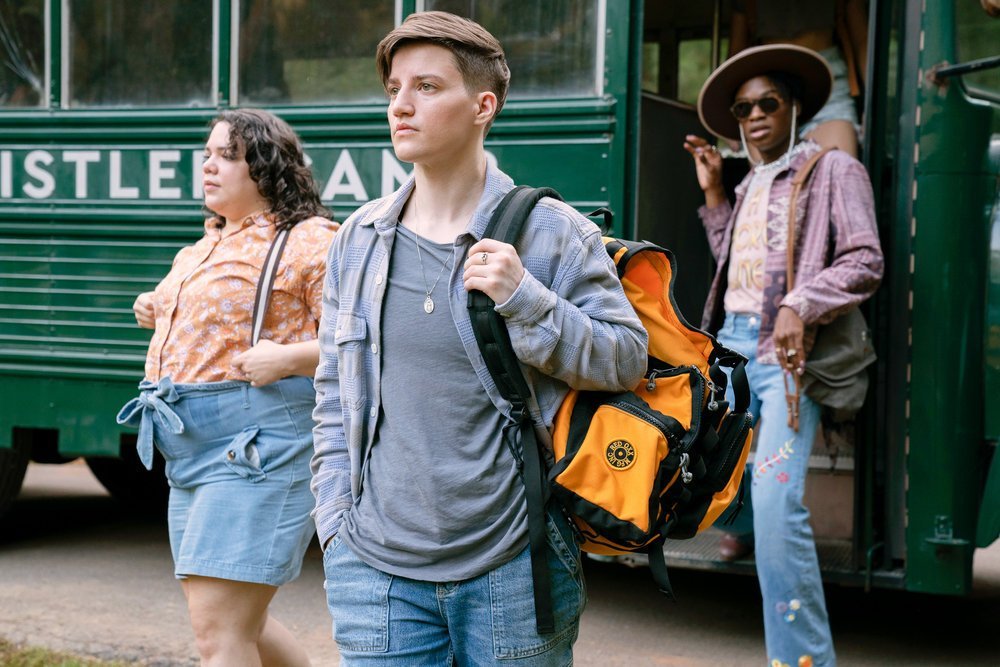
THEY/THEM -- Pictured: (l-r) Theo Germaine as Jordan, Austin Crute as Toby -- (Photo by: Josh Stringer/Blumhouse)
On the surface, at least, it does a pretty good job of creating that off-balance atmosphere: A busload of queer teens of all identities reluctantly arrive at Camp Whistler, what purposes to be a “gay conversion” camp – a phrase so full of repugnance it’s difficult to imagine anyone except the most extreme of homophobes being comfortable saying those words. The camp’s owner is Owen, played by the appropriately reptilian Kevin Bacon, an actor who effortlessly can seem creepy, menacing and friendly almost entirely by the context you put him in. Owen’s welcome speech makes it sound like this is not a conversion camp at all, but a journey of self-discovery: He’s tolerant of the trans-identifying Jordan (Theo Germaine), he avoids bible-thumping and constant indoctrination, he seems kinda hip. It throws off the campers, some of whom want to be there for their own sakes, not their parents.

THEY/THEM -- Pictured: (l-r) Carrie Preston as Cora Whistler, Anna Chlumsky as Molly, Boone Platt as Zane, Kevin Bacon as Owen Whistler -- (Photo by: Josh Stringer/Blumhouse)
But the reality is very different, and underneath we see the hypocrisy and the tension. We know something is afoot; you can’t have seen a horror movie, especially one set at a summer camp, and not be attuned to the tropes of the suspicious handyman, the strange shapes and sounds in the dark, the vulnerability of the shower cabin…. Not to mention the seemingly unrelated but bloody murder in the opening scene. Writer-director John Logan hits these touchstones like a batter hitting each bag as he’s rounding the bases, which is what you want in a genre film, but maybe not so much in a revolutionary issue drama where tropes become cliches. Logan is one of the most respected screenwriters in Hollywood (Gladiator, Hugo, The Aviator) but this is his debut as a director, and his inexperience shows. The performances are perfunctory and the visual adequate and underlit. The film gets stuck in the Sunken Place and struggles to get out to assert an identity of its own.
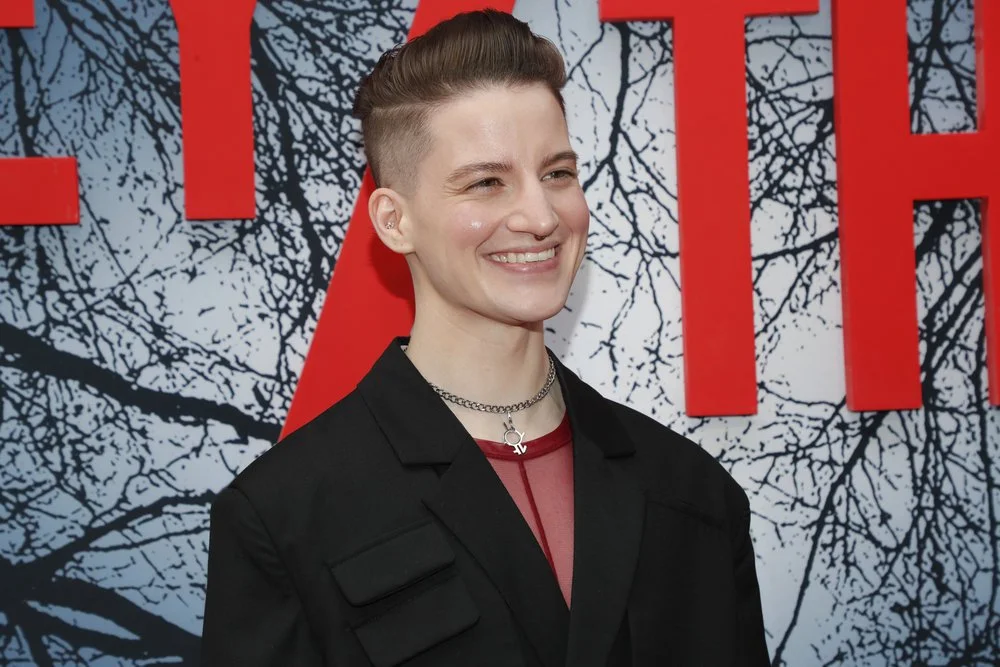
THEY/THEM -- They/Them Premiere Event on July 27, 2022, at Studio 525 in New York City -- Pictured: Theo Germaine -- (Photo by: Astrid Stawiarz/Peacock)
But is it fair to compare – or at least, as long as you can enjoy a film on its own, does it matter that it doesn’t rise to the level of a genre-defining modern classic? Well, sorta. The similarities are so obvious (a lead character named Jordan? Peele’s last film was Us and now we have They/Them?) it seems to invite comparisons. Do I respect applying the thoughtfulness of Get Out to a gay theme? Sure, despite how humorless and preachy it gets by the end. But as a slasher film, They/Them is clunky and uninspired. I wouldn’t check into this camp.
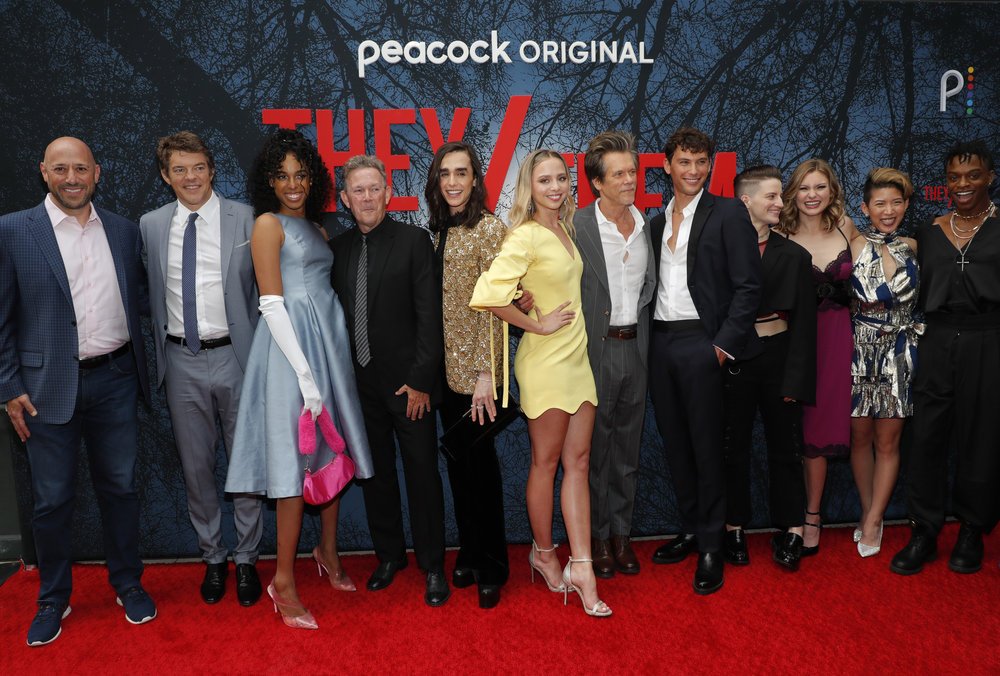
THEY/THEM -- They/Them Premiere Event on July 27, 2022, at Studio 525 in New York City -- Pictured: (l-r) Matt Strauss, Chairman Direct-to-Consumer & International; Jason Blum, CEO Blumhouse; Quei Tann, John Logan, Writer/Director/EP; Darwin Del Fabro, Anna Lore, Kevin Bacon, Cooper Koch, Theo Germaine, Hayley Griffith, Monique Kim, Austin Crute -- (Photo by: Astrid Stawiarz/Peacock)
They/Them premieres Aug 5 on Peacock.
