
IT’S ABOUT TIME | FILM REVIEW
BY ARNOLD WAYNE JONES
The convoluted emotional seesaw of being closeted is explored through quirky storytelling in the racy Heated Rivalry & the somber Plain Clothes
The coming out process is a confusing and inherently dramatic one, and for many, often inchoate. The first person you have to come out to, of course, is always yourself; the second is often the object of your desire. Beyond that? It gets dodgy. Things have definitely become easier over the decades in terms of social acceptance, legal protections and community support, but for many, family expectations and coworkers often remain a stumbling block. It can be so confounding, in fact, remembering what you’ve told to whom and who you can trust creates a brainstorm of jumbled recollections and conflated experiences. Closeted gay people often live inside a mental chasm of breathless expectations and pulsating memories which can, let’s be honest, fuck you up.
Two recent queer entertainments do a remarkable job of capturing that sense of uncertainty, trepedation and sexual excitement, both by savvily corkscrewing their storytelling timelines: The HBO miniseries Heated Rivalry and the indie film Plain Clothes.
Chances are you’ve seen at least some of Heated Rivalry, and probably many readers furiously binge-watched it as soon as they could. It has tapped into the Zeitgeist as few expressly queer-themed content ever has. The initial appeal is obvious: Young, impossibly attractive men engaged in racy nude sex scenes. But aside from what could be called lurid fascination, it’s true artistic merits lay in the dizzying whirlwind of its storytelling.
The opening scene of Episode 1 lasts all of two minutes, then flashforwards a month, then six months, then six months ago. Initially, this can be attributed to merely expedient exposition, but it continues this breakneck pace all throughout. And it dawns on you: Series creator Jacob Tierney isn’t merely covering a lot of plot, but approximating the mental gymnastics that sexual hunger can put us through.
The series focuses primarily on just two characters, which both helps justify the time jumps and intensify the viewers’ shared excitement. Shane Hollander (Hudson Williams) is a introverted Canadian hockey phenom, about to be drafted into the NHL. He’s considered the most promising rookie to join the league… other than the insolent Russian braggard Ilya Rozanov (Connor Storrie), who simultaneously intimidates, aggravates and tiltillates Shane. They are drafted by rival teams and the media feed their perceived animosity, but very quickly they pursue a mutual sexual attraction: For Shane, his first foray into his sexuality, for Ilya, just his latest following a volatile situationship with his coach’s son back in Russia (where coming out, even in the 2010s, is simply not an option).
Shane and Ilya have passionate encounters that, just as they build up momentum, get derailed by such complications as seasons, scheduling and interference from clueless friends and family. But the end of Episode 2, we’ve probably jumped ahead four years or so; when Episode 3 begins, we start jumping backwards in time as well. All of this sudden unpreditable generates emotional tension, primarily in Shane, whose diffident nature make his constantly worried about what signals he might be giving off. We see less of Ilya’s internal struggle; despite his own issues, the repressive culture of Russia offers him fewer options, so he suppresses his feelings more, even to himself.
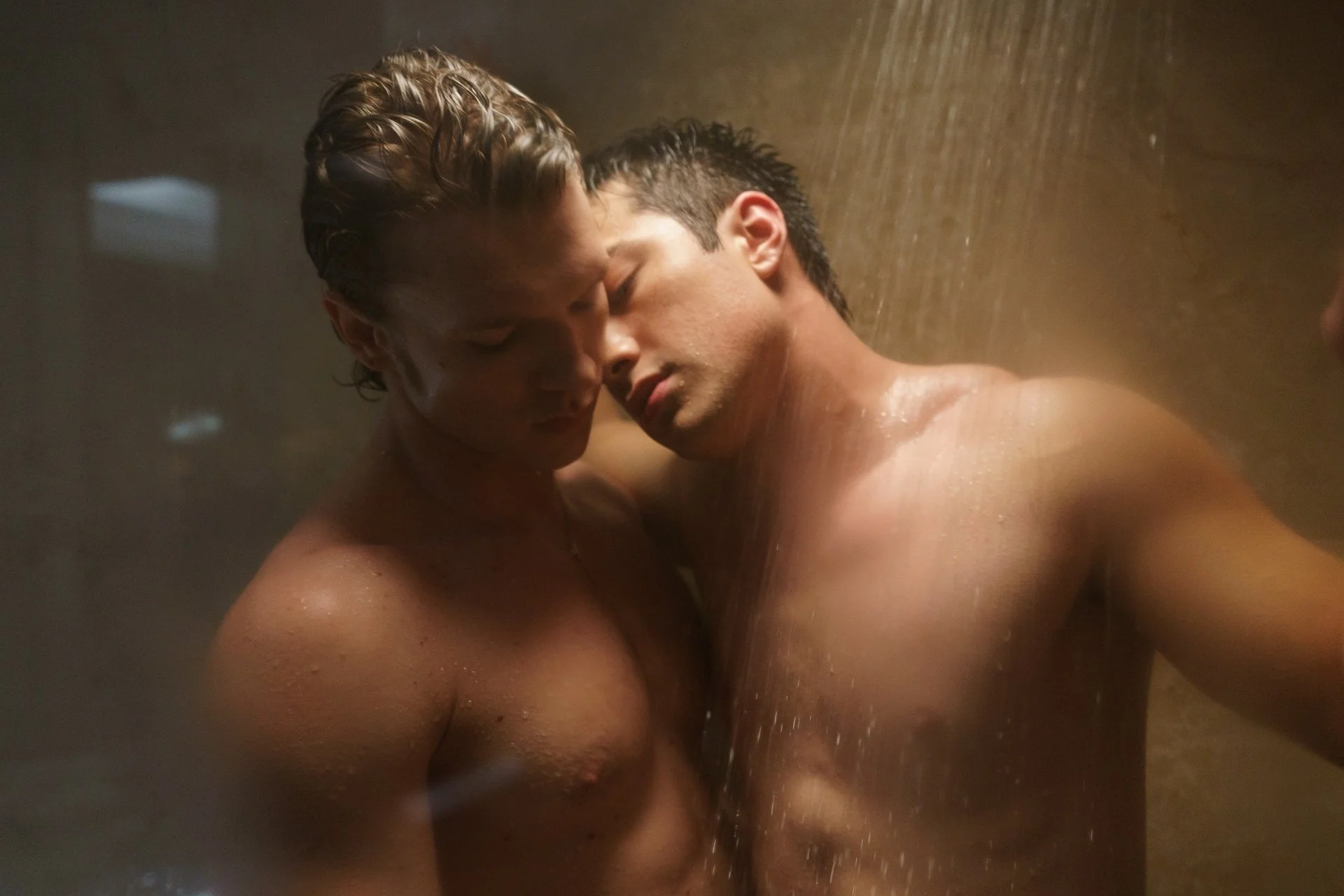
Connor Storie and Hudson Williams in HEATED RIVALRY, Photograph by Sabrina Lantos Photo courtesy of HBO Max/WBD
That kind of repression also leads to some juicy betwee-the-sheets panting. One of the tremendous stylistic victories of the series is that the sex, is presented neither coyly or explicitly. We never see full frontal or anything penetrative, but it feels largely like that’s due to the skill of the film editors. There’s nothing “soft core” Skinamax about the sex; it just feels like we caught them moments before or after the raciest moments. But there’s also a sweetness to the storytelling, aided immeasurably by the guileless performances by Storrie and Williams. I have no idea about the personal sexuality of their man, but they commitment and easy of their performances adds an especial resonance.
The sports setting is used not only to justify the closeted nature of the men (it’s remarkable how few active professional athletes have come out since basketball player Jason Collins became the first presently-rostered member of a major team sport in the U.S. came out in 2013), but also to create geographic barriers and, frankly, show hardbodied young men engaged in tantalizing coitus. Team sports provide an inherently provocative venue for “secret love” stories, what with all the lockerroom antics, mind games and physical contact on and off the ice, plus it provides a high profile for the lovers – who cares if two schoolteachers are carrying on? They may be on the ice, but Heated Rivalry is pure fire.
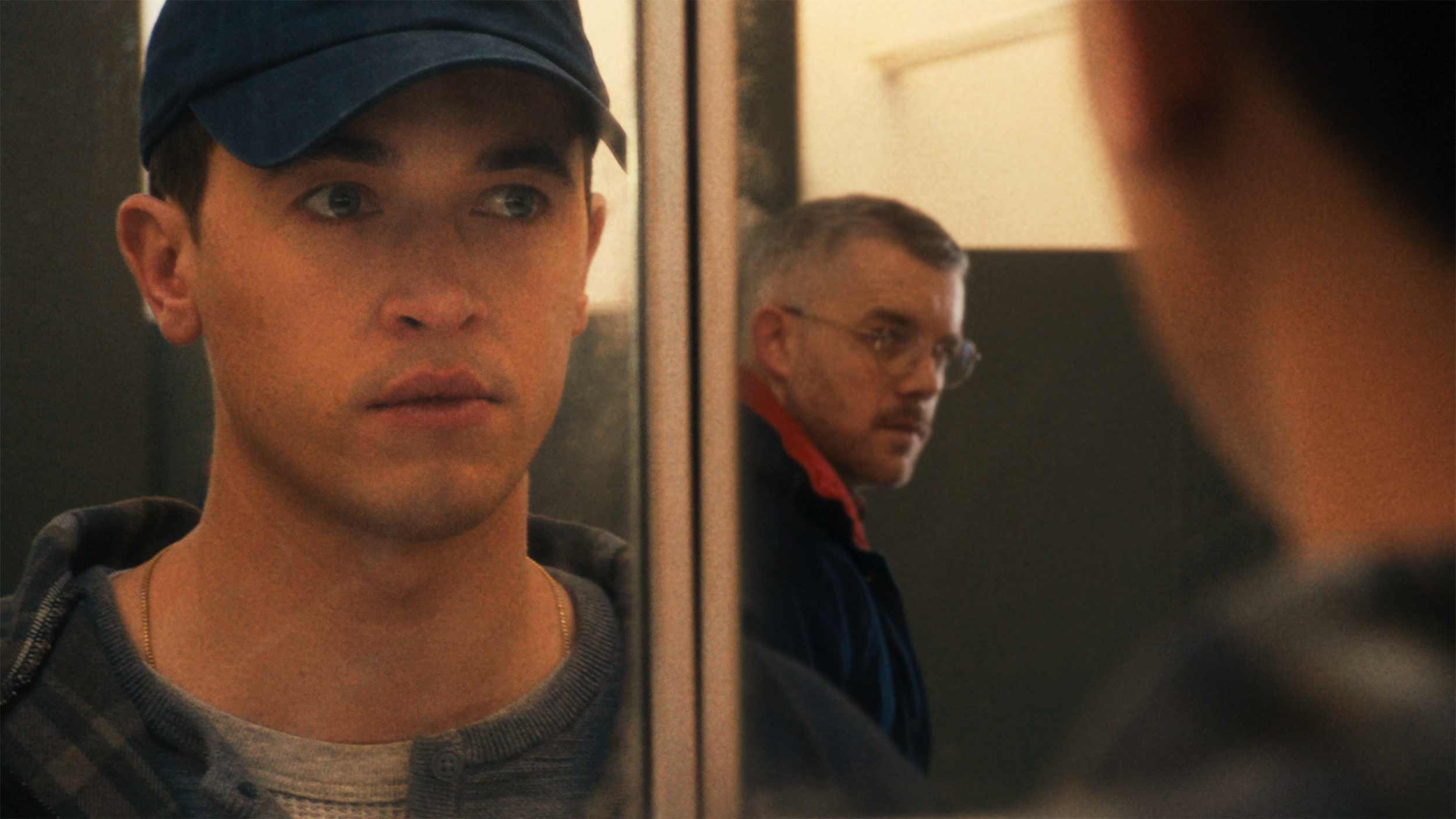
Speaking of prosaic coming out stories, Plain Clothes employs a similarly disjointed narrative story with, in some ways, lower stakes but greater impact. Set in the late 1990s or so, it’s not as lively and accessible as Heated Rivalry but trods along the same ground.
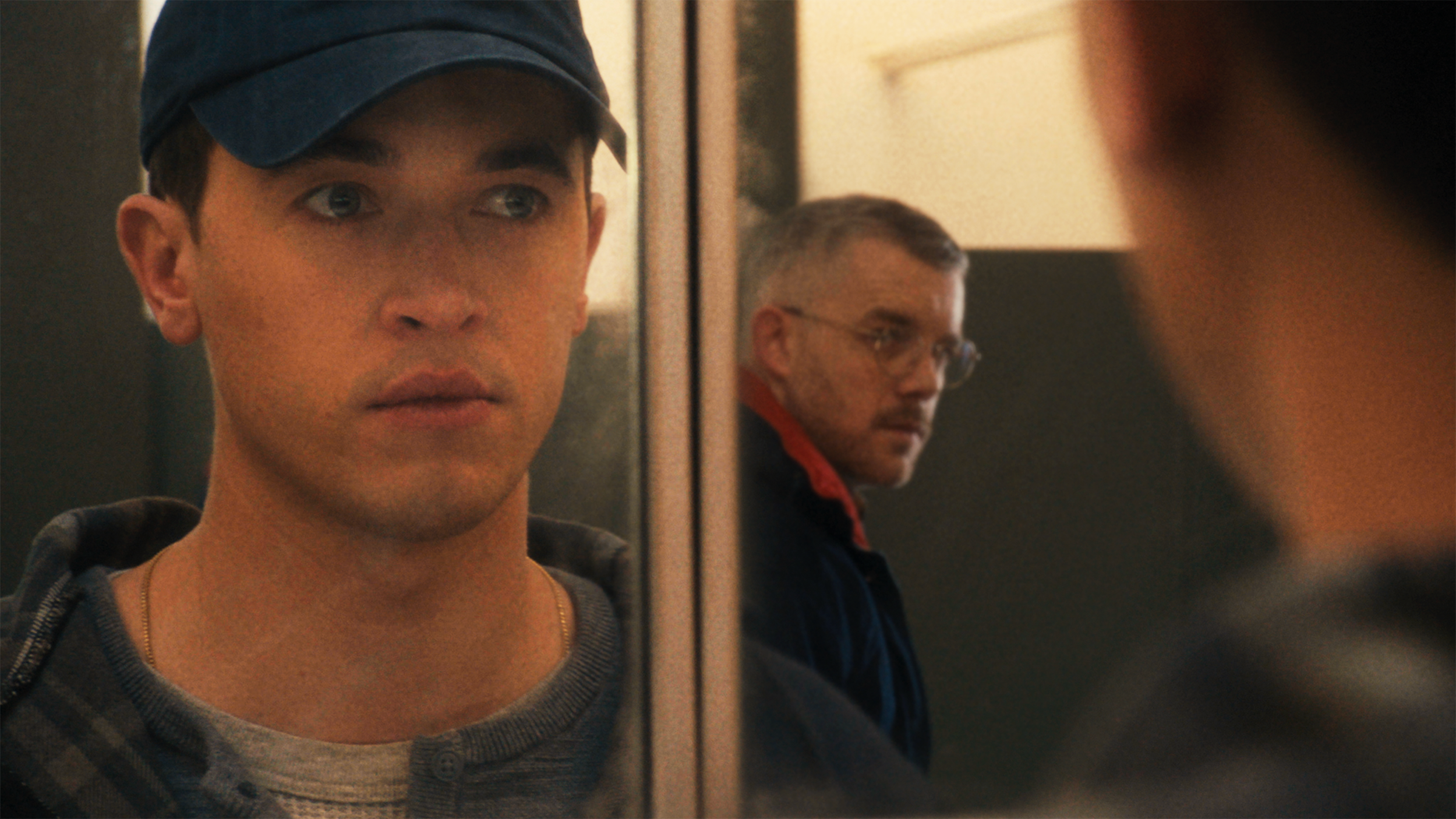
Tom Blyth and Russell Tovey in PLAINCLOTHES, a Magnolia Pictures release. Photo courtesy of Magnolia Pictures.
Lucas (Tom Blyth) is an undercover cop in suburban Upstate New York. His gig for a while has been cruising the men’s room at the local mall, coaxing men into exposing themselves so that they can be arrested for indecent exposure – and, predicably, perhaps ruin their lives. Everything dances on just this side of entrapment, with the cops knowing full well the arrestees won’t fight the charges for fear of being outed and labeled sex offenders, all of which buggers the question: Then why lure them into such conduct in the first place?
It’s a questionable policy led by a seemingly homophobic lieutenant (John Bedford Lloyd), but is especially conflicting for Lucas, who himself is deeply closeted. He endures the feeling of disconnection until one john, Andrew (Russell Tovey) triggers something primal in him. He lets Andrew off by tanking the sting, but the two later meet. Lucas seems woefully inexperienced when it’s not part of his job description; Andrew is the more seasoned cruiser, who knows how to meet, where to go and what he wants … which is not, on balance, to ever hookup a second time. But he makes an exception for Lucas (whom he knows as “Gus”) … at least initially. As things become more complicated, the tone wanders from melodrama to psychological thriller without the lurid component.
Writer/director Carmen Emmi throws everything off balance by jumping between timelines – one, the linear plot with Andrew, and a second, at some point in the future where Lucas has a moustache and a complicated relationship with his family of homophobic assholes. At first, we don’t even realize the time displacement or that it’s even Lucas – he bears a stark resemblance to one of the johns he arrested earlier. But like a cabbage twist fall off in layers, providing a psychological payoff that, while not all that surprising, feels earned.
The film that Plain Clothes most reminds me of is the gay indie Pit Stop (seek it out!). Both have a measured pace and somewhat dour look, but avoid being either boring or chiche-ridden. The character developments resonate as sad reminders of a time – and mentality – when being yourself was the worst thing imaginable… and hopeful lay for us a roadmap of how to avoid those traps again
Heated Rivalry, all episodes available on HBO; Plain Clothes available on Prime Video and Mubi.
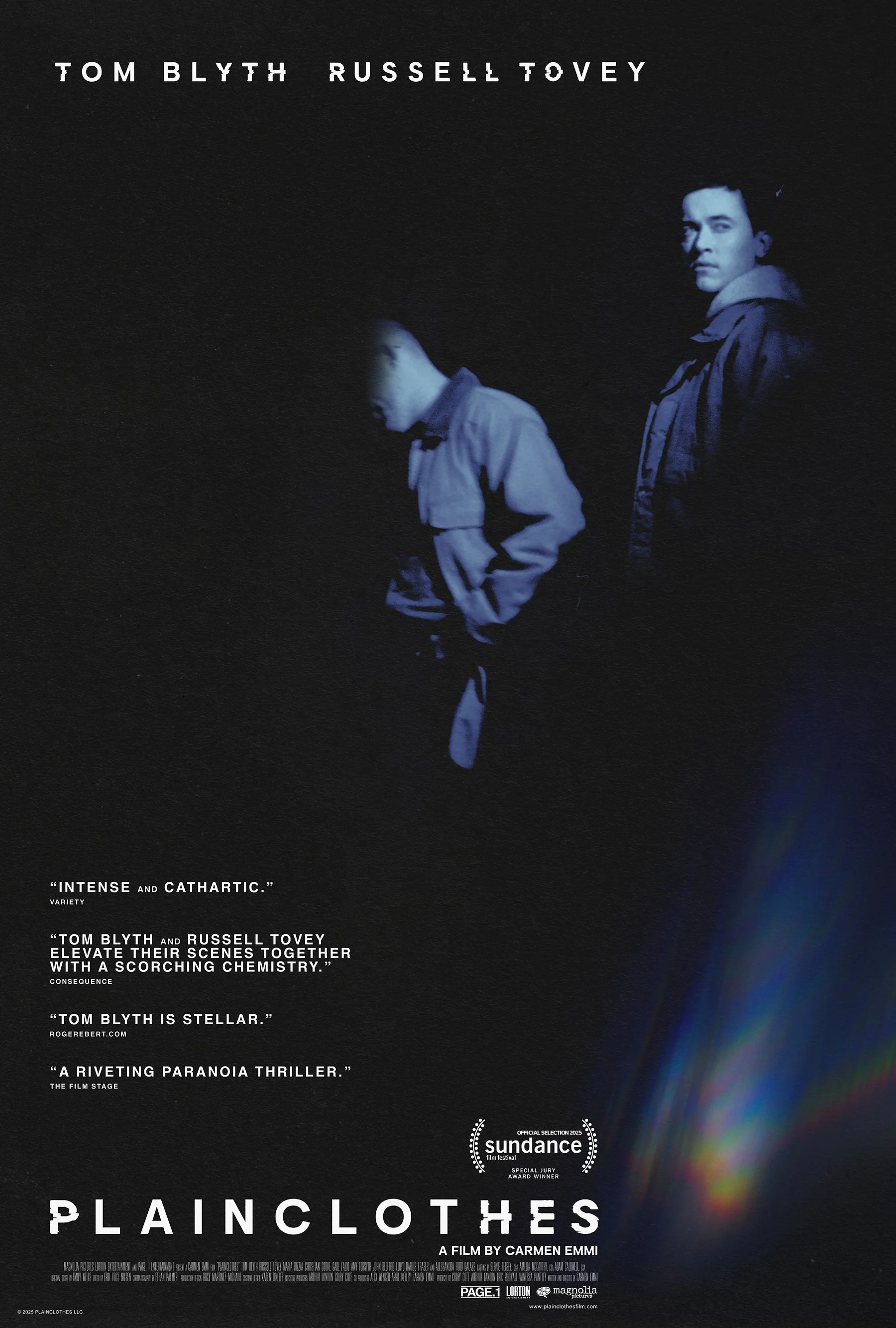
Theatrical one-sheet for PLAINCLOTHES, a Magnolia Pictures release. Photo courtesy of Magnolia Pictures.